There is a difference between lighting a fire and keeping it burning. Anvadhan is the discipline of the latter. It is a day dedicated not to starting something new, but to ensuring that the spiritual energy you have already gathered does not fade away. Dedicated to Lord Vishnu and Agni, Anvadhan 2026 offers a unique benefit: it acts as a seal on your worship. By observing this ritual, you ensure that the merit from your prayers is preserved rather than lost to the distractions of daily life.
Think of it this way: you do not water a plant once and expect it to grow forever. Anvadhan works the same way for your spiritual practice. It is the quiet act of tending your inner fire so it stays alive between festivals, between prayers, and between the moments when life gets busy. If you are planning your year, here is the complete Anvadhan 2026 guide with all dates, the best puja timings for the upcoming months, and how to observe this ancient practice in a modern schedule.
Anvadhan 2026: Quick Glance
- Observed twice every month on Purnima (full moon) and Amavasya (new moon)
- Dedicated to Lord Vishnu and Agni Dev (the fire deity)
- Purpose: Preserve spiritual energy, build discipline, and invite peace into your home
- Best for: Anyone looking to create a steady, grounding spiritual routine
What Is Anvadhan and Why Does It Matter
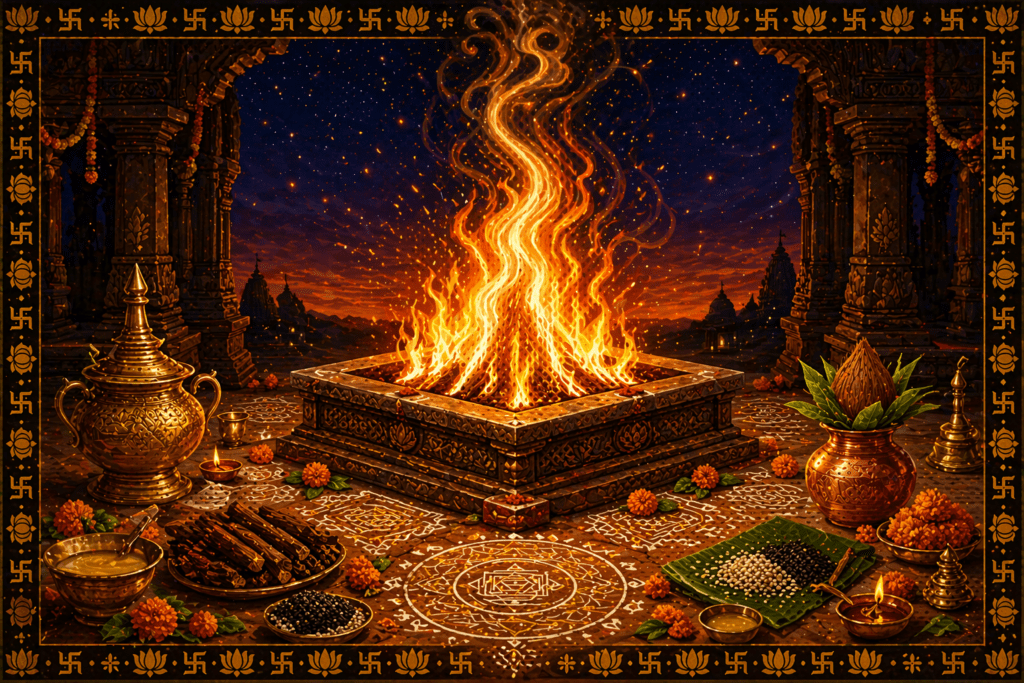
Anvadhan is a sacred Vedic ritual rooted in the Vaishnava tradition. At its heart, it is the practice of adding fuel to the sacred fire after Agnihotra, ensuring that the flame is never allowed to die out. This living fire represents life force, discipline, and quiet devotion, something that must be tended with care rather than taken for granted.
The festival follows the lunar calendar and falls twice every month: once on the full moon day of Shukla Paksha and again on the new moon day of Krishna Paksha. These lunar moments are considered especially powerful because the mind and environment are more receptive to spiritual focus.
For devotees of Lord Vishnu, Anvadhan carries deep meaning. It is a day marked by fasting, restraint, and prayer, where the emphasis shifts away from external celebration and towards inner purification, mental steadiness, and mindful devotion. In a world that constantly pulls your attention outward, Anvadhan is the rare practice that asks you to quietly look inward.
Anvadhan 2026 Dates: Full Year Calendar
Anvadhan occurs throughout the year without exception. Here is the complete month-by-month list:
January 2026
- Saturday, January 3
- Sunday, January 18
February 2026
- Sunday, February 1
- Tuesday, February 17
March 2026
- Tuesday, March 3
- Wednesday, March 18
April 2026
- Wednesday, April 1
- Friday, April 17
May 2026
- Friday, May 1
- Saturday, May 16
- Sunday, May 31
June 2026
- Sunday, June 14
- Monday, June 29
July 2026
- Tuesday, July 14
- Wednesday, July 29
August 2026
- Wednesday, August 12
- Thursday, August 27
September 2026
- Thursday, September 10
- Saturday, September 26
October 2026
- Saturday, October 10
- Sunday, October 25
November 2026
- Monday, November 9
- Tuesday, November 24
December 2026
- Tuesday, December 8
- Wednesday, December 23
Note: May 2026 has three Anvadhan dates because of the double Jyeshtha month (Adhik Maas) this year.
Also read: May 2026 Festivals: Calendar, Dates, Vrats & Ekadashi List
Auspicious Puja Timings for Upcoming Anvadhan Dates
Although Anvadhan is observed throughout the day, devotees often look for the most favourable time windows to focus their prayers. Here are the best Choghadiya timings for the next five Anvadhan dates.
April 1, 2026 (Wednesday)
- Labha (Gain): 06:11 AM to 07:45 AM
- Amrita (Best): 07:45 AM to 09:18 AM
- Shubha (Good): 10:52 AM to 12:25 PM
- Labha (Gain): 05:05 PM to 06:39 PM
- Shubha (Night): 08:05 PM to 09:32 PM
- Amrita (Night): 09:32 PM to 10:58 PM
April 17, 2026 (Friday)
- Labha (Gain): 07:31 AM to 09:07 AM
- Amrita (Best): 09:07 AM to 10:44 AM
- Shubha (Good): 12:21 PM to 01:58 PM
May 1, 2026 (Friday)
- Labha (Gain): 07:20 AM to 08:59 AM
- Amrita (Best): 08:59 AM to 10:39 AM
- Shubha (Good): 12:18 PM to 01:58 PM
- Labha (Night): 09:37 PM to 10:58 PM
May 16, 2026 (Saturday)
- Shubha (Good): 07:12 AM to 08:54 AM
- Labha (Gain): 02:00 PM to 03:42 PM
- Amrita (Best): 03:42 PM to 05:23 PM
- Labha (Night): 07:05 PM to 08:23 PM
- Shubha (Night): 09:41 PM to 10:59 PM
May 31, 2026 (Sunday)
- Labha (Gain): 08:51 AM to 10:35 AM
- Amrita (Best): 10:35 AM to 12:19 PM
- Shubha (Good): 02:03 PM to 03:46 PM
- Shubha (Night): 07:14 PM to 08:30 PM
- Amrita (Night): 08:30 PM to 09:46 PM
How to Observe Anvadhan at Home
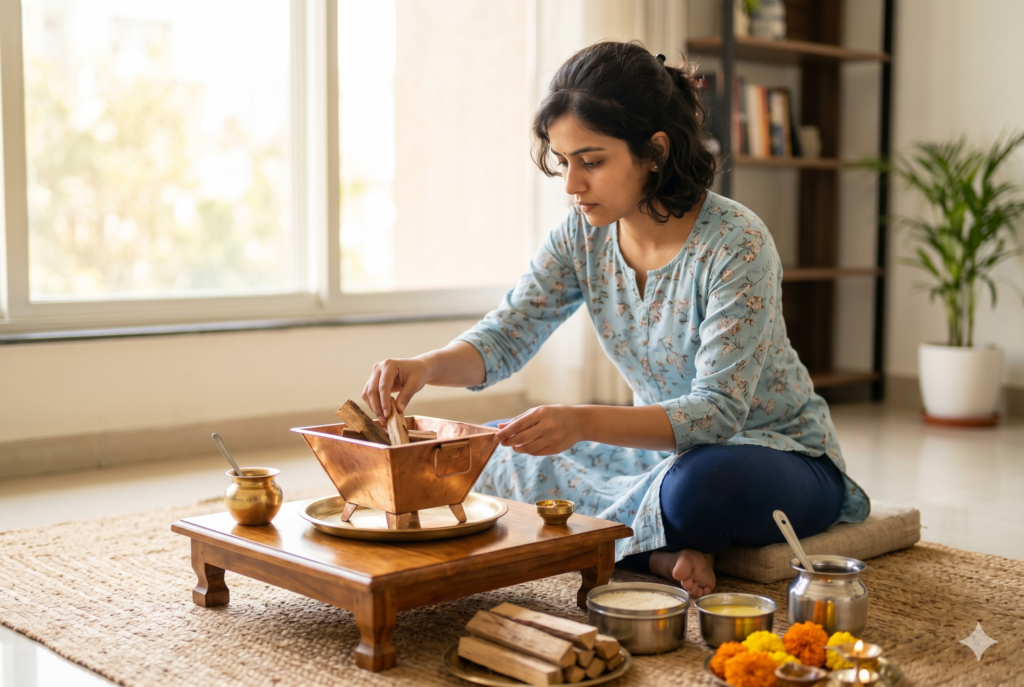
Anvadhan is not complicated, but it demands sincerity. You do not need a large setup or expensive materials. What matters is your attention and your intention. Here is a simple step-by-step guide:
- Begin with purification: Wake up early and take a clean bath. Wear fresh, sattvik clothes to prepare your body and mind for worship.
- Prepare the sacred space: Clean your place of worship thoroughly. If you have a havan kund, set it up with care. If not, a clean puja area with a ghee diya works perfectly.
- Set your intention: Sit facing east and spend a few quiet minutes meditating on Lord Vishnu and Agni Dev before beginning the ritual.
- Make a simple resolution: State your intent to perform Anvadhan with faith, discipline, and devotion.
- Ignite the sacred fire: Light the fire using dry wood or samidha and offer ghee to stabilise the flame.
- Perform the havan: Offer sesame seeds, rice, samidha, and ghee into the fire while chanting mantras. You can support this step by listening to the Vishnu Chalisa on AstroSure.ai to maintain focus and inner steadiness.
- Maintain the fire: After Agnihotra, ensure the fire continues gently. This symbolises the ongoing presence of dharma, energy, and awareness in your life.
- Conclude with peace: Offer final prayers, chant the Shanti Mantra, and end the ritual with charity or feeding others, which is considered highly auspicious.
Rules and Precautions for Anvadhan
Anvadhan is a sacred discipline, and certain rules help preserve its spiritual power. These are not meant to restrict you, but to support focus and purity during the observance:
- Maintain physical and mental purity throughout the day
- Eat only sattvik food or observe a full fast if possible
- Avoid anger, arguments, and negative speech
- Do not extinguish the sacred fire abruptly or disrespectfully
- Use clean and fresh havan materials only
- Chant mantras clearly and with attention
- Keep the mind calm, restrained, and devotional
Following these guidelines helps the ritual fulfil its purpose of purification and inner balance.
Why Anvadhan Matters for Modern Life
Most spiritual practices today are about intensity, a powerful puja, a strict fast, a dramatic ritual. Anvadhan is the opposite. It is about consistency. It teaches you that showing up quietly, again and again, is more powerful than a single grand gesture.
In practical terms, observing Anvadhan brings real benefits to your daily life:
- Mental clarity: The act of sitting still, tending a flame, and chanting calms an overactive mind. Over time, this builds genuine mental peace.
- Discipline without pressure: Unlike strict fasts or complex rituals, Anvadhan asks for just 30 minutes of focused devotion. It fits easily into a busy schedule.
- Family harmony: Many families observe Anvadhan together. The shared act of lighting a diya and sitting in prayer naturally reduces household tension and brings everyone closer.
- Spiritual momentum: Just as a gym routine builds physical strength over months, Anvadhan builds spiritual strength over the year. Each observance adds to the last.
Anvadhan 2026 offers 25 opportunities to pause, reflect, and recommit. These sacred days remind us that not every beginning needs noise or urgency. Some beginnings need patience, attention, and a steady flame that is simply kept alive. By observing Anvadhan with sincerity, you honour an ancient Vedic tradition while creating space for peace, balance, and quiet progress in modern life.
Also read: April 2026 Festivals: Important Dates to Know
Anvadhan 2026 FAQs
1. What is Anvadhan?
Anvadhan is a Vedic ritual dedicated to Lord Vishnu and Agni Dev, observed on Purnima and Amavasya. It involves maintaining the sacred fire through offerings and prayer.
2. How many times does Anvadhan fall in 2026?
Anvadhan falls 25 times in 2026 — twice each month, with May having three dates due to the Adhik Maas (double Jyeshtha month).
3. Can I observe Anvadhan without a havan kund?
Yes. If you do not have a havan kund at home, you can observe the day with a ghee diya, quiet meditation, mantra chanting, and sattvik food. The intention matters more than the setup.
4. What should I eat on Anvadhan?
Eat only sattvik food: fruits, milk, simple vegetarian meals without onion, garlic, or heavy spices. Many devotees observe a complete fast.
5. Why does May 2026 have three Anvadhan dates?
Because 2026 has an Adhik Maas (extra lunar month) falling in Jyeshtha. This extends the lunar cycle, adding an extra Purnima/Amavasya pair in May.